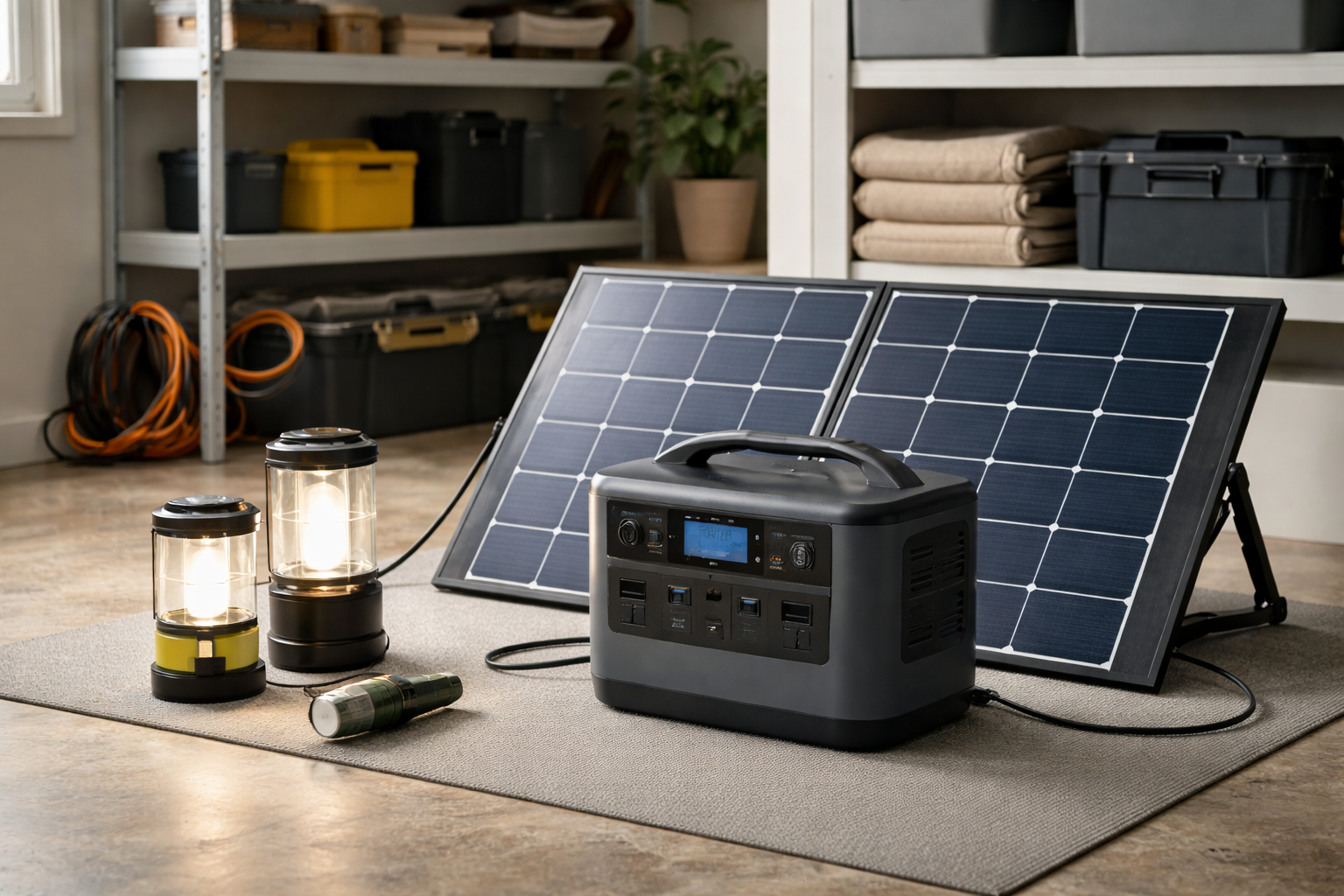
Reliable, quiet power planning for everyday homes
Power interruptions are one of the most common household disruptions — and one of the most disruptive when unplanned.
Even short outages can affect:
- Lighting
- Food storage
- Communication
- Heating or cooling
- Basic comfort
This section of Resilient Home Guide focuses on simple, realistic energy and power solutions that help households stay functional during outages — without noise, fuel storage, or complex systems.
What Home Energy Preparedness Really Means
Home energy preparedness does not mean installing generators, rewiring your house, or living off-grid.
For most households, it means:
- Having safe, reliable lighting
- Keeping phones and devices charged
- Preserving food during outages
- Maintaining basic comfort
Preparedness is about continuity, not independence from the grid.
👉 Best Solar Generators for Home Backup Power
The Core Elements of Home Energy & Power
A practical home power plan usually includes several layers:
✔ Emergency Lighting
Lighting is the first and most noticeable need during an outage.
Effective options include:
- LED lanterns
- Rechargeable lights
- Headlamps
These provide safe, efficient light without fire risk.
✔ Device & Communication Power
Keeping devices charged supports:
- Communication
- Information access
- Emergency coordination
Simple solutions such as power banks or compact power stations cover most short-term needs.
✔ Backup Power for Essentials
For longer outages, households may plan for limited backup power to support:
- Refrigeration
- Medical devices
- Internet or work needs
Quiet, indoor-safe power options are often preferred over fuel-based systems.
Start Here: Home Energy & Power Guides
If you’re new to home power planning, begin with these resources:
- Best Solar Generators for Home Backup Power
A practical overview of quiet, indoor-safe power stations for normal households. - Emergency Lighting Options for Power Outages (coming soon)
A comparison of lanterns, headlamps, and battery lighting. - How to Plan Backup Power for Essentials (coming soon)
How to prioritize devices and manage limited power effectively.
More guides will be added covering seasonal needs, apartment-friendly options, and power planning for families.
For a simple overview of household preparedness systems, see our 72-Hour Home Preparedness Checklist.
Common Power Planning Mistakes
Most power-related stress comes from:
- Relying on a single power source
- Underestimating lighting needs
- Forgetting to charge backup devices
- Overbuying complex systems
Home energy preparedness works best when it’s simple, layered, and easy to maintain.
How Power Planning Fits Into Home Preparedness
Energy planning overlaps with:
- Food Independence (refrigeration, cooking)
- Water Security (filtration devices, pumps)
- Medical Preparedness (powered health equipment)
Power supports every other system — even basic planning makes a noticeable difference.
👉 Free Home Power Planning Checklist
Not sure what you actually need to power during an outage?
Our simple checklist helps you:
- Identify essential devices
- Estimate basic power needs
- Avoid unnecessary purchases
[Get the Free Checklist]
Building Home Power Readiness Gradually
You don’t need to do everything at once.
A calm approach:
- Add reliable lighting
- Ensure communication devices can stay charged
- Identify essential appliances
- Add backup power only where it makes sense
Small steps dramatically improve comfort and confidence.
Explore More Preparedness Topics
Home energy planning works best alongside:
- Food Independence
- Water Security
- Medical & Health Preparedness
- Practical DIY Readiness
Together, these systems create homes that handle outages without panic.