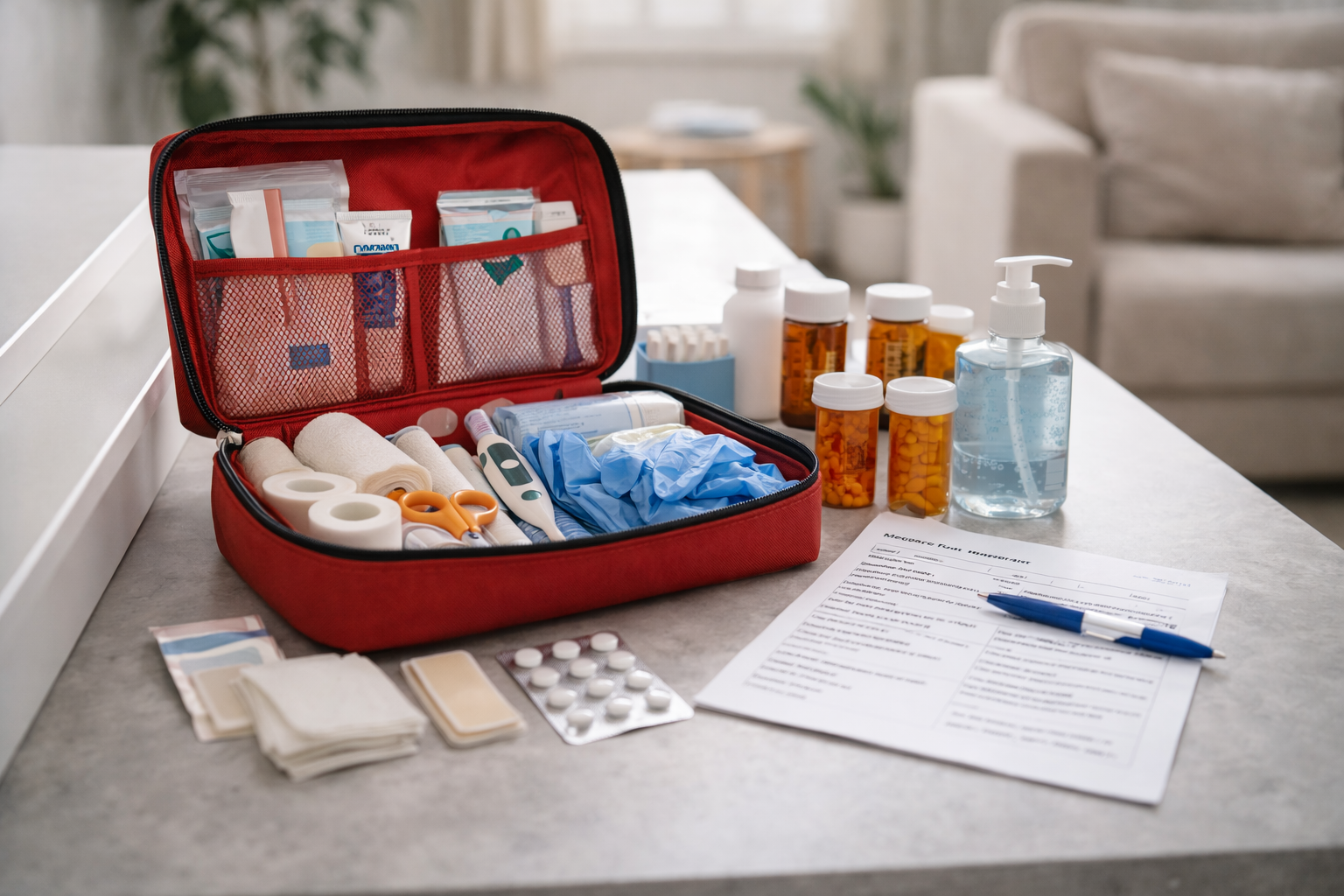
A practical guide for calm, capable homes
Most medical emergencies at home are not dramatic — they’re inconvenient, stressful, and time-sensitive.
Minor injuries, unexpected illness, delayed prescriptions, or limited access to services can quickly become overwhelming when basic supplies aren’t organized or available.
A home emergency medical kit doesn’t replace professional care.
It simply helps households respond calmly and responsibly when care or supplies are delayed.
This guide walks through what to include, what to avoid, and how to keep a medical kit practical for everyday homes.
What a Home Emergency Medical Kit Is (and Is Not)
A medical preparedness kit is not a trauma kit or a substitute for medical professionals.
It is:
- A collection of basic supplies for common household needs
- A way to reduce stress during delays or minor issues
- A support system for short-term disruptions
Preparedness is about organization and readiness, not medical treatment.
Core Components of a Home Medical Kit
A practical kit focuses on essentials you’re likely to use.
✔ Basic First Aid Supplies
These address the most common household issues:
- Adhesive bandages (various sizes)
- Sterile gauze pads
- Medical tape
- Antiseptic wipes
- Antibiotic ointment
- Tweezers
- Scissors
These items handle cuts, scrapes, and minor injuries effectively.
✔ Pain & Symptom Relief (Non-Prescription)
For short-term discomfort:
- Pain relievers (as appropriate for household members)
- Fever reducers
- Antihistamines (if commonly used)
- Cough or cold relief
Always follow usage instructions and store safely.
✔ Hygiene & Sanitation Items
Hygiene supports health during disruptions:
- Disposable gloves
- Hand sanitizer
- Cleaning wipes
- Tissues
- Masks (optional, household preference)
These help reduce spread of illness and maintain cleanliness.
✔ Medical Tools & Information
Simple tools improve response:
- Digital thermometer
- Basic medical reference sheet
- Emergency contact list
- Medication list (printed)
- Fresh water
Information is as important as supplies.
Medications & Prescription Planning
Medical preparedness includes responsible medication organization, not stockpiling.
Best practices:
- Keep a current list of prescriptions
- Track refill dates
- Store medications properly
- Avoid expired or improperly stored items
If medications are essential, discuss continuity planning with a healthcare provider.
Where to Store Your Medical Kit
Accessibility matters.
Good locations include:
- A dedicated drawer or cabinet
- A central, known location
- Away from heat and moisture
Avoid storing kits in places that are:
- Hard to reach
- Forgotten
- Scattered across multiple rooms
Consistency helps everyone respond calmly.
How Often to Review & Update Your Kit
Medical kits require light maintenance.
A simple rhythm:
- Review every 6 months
- Check expiration dates
- Replace used items
- Update medication lists
Small reviews prevent big problems later.
Common Medical Preparedness Mistakes
Most households struggle due to:
Overbuying
Too many supplies create clutter and confusion.
Poor Organization
Supplies that aren’t labeled or grouped are hard to use quickly.
Ignoring Expiration Dates
Expired items reduce effectiveness and trust in the kit.
Expecting Too Much
Preparedness supports care — it does not replace professionals.
Free 72-Hour Home Readiness Checklist
If basic services are interrupted, would your household be ready?
This simple checklist shows you:
- What to prepare first
- What most people overlook
- What you can safely ignore
Designed for calm, practical homes — not extreme scenarios.
👉 Get the free checklist and keep it for reference.
How Medical Kits Fit Into Home Preparedness
Medical readiness supports:
- Water Security (hygiene and sanitation)
- Food Independence (nutrition during illness)
- Home Energy & Power (powered devices, refrigeration)
Preparedness works best when systems support each other.
This checklist is part of our broader Medical & Health Preparedness resource, where we cover calm, practical ways to stay organized when care or supplies are delayed.
Frequently Asked Questions
Do I need a pre-made medical kit?
Pre-made kits can be useful as a starting point, but many households prefer to customize kits over time.
How many kits should a home have?
Most homes benefit from:
- One main household kit
- One smaller travel or vehicle kit (optional)
Should I include prescription medications?
Only store prescriptions responsibly and in line with medical guidance. Preparedness includes planning, not excess storage.
Final Thoughts
A home emergency medical kit is about confidence and calm, not fear.
When supplies are organized and accessible:
- Stress is reduced
- Minor issues are handled more smoothly
- Households feel more capable
Preparedness is built through small, thoughtful steps.
Free 72-Hour Home Readiness Checklist
If basic services are interrupted, would your household be ready?
This simple checklist shows you:
- What to prepare first
- What most people overlook
- What you can safely ignore
Designed for calm, practical homes — not extreme scenarios.
👉 Get the free checklist and keep it for reference.