Simple abilities that make everyday homes more resilient
DIY readiness isn’t about becoming an expert or taking on major construction projects.
It’s about having basic skills that prevent small problems from becoming stressful emergencies when services, supplies, or help are delayed.
Most household disruptions are minor — loose fittings, power issues, temporary leaks, or equipment failures. Knowing how to respond calmly saves time, money, and stress.
This guide covers essential DIY skills that improve home readiness without complexity or risk.
What DIY Readiness Really Is
DIY readiness does not mean doing everything yourself.
It means:
- Understanding basic home systems
- Knowing how to perform safe, simple tasks
- Being able to stabilize situations temporarily
- Recognizing when professional help is needed
Preparedness is about capability, not independence from experts.
Essential DIY Skill Categories
A small set of skills covers most everyday issues.
1️⃣ Understanding Home Shutoffs
Knowing how to shut off key systems is one of the most valuable preparedness skills.
Learn where to locate:
- Main water shutoff
- Electrical breaker panel
- Gas shutoff (if applicable)
This knowledge can:
- Prevent water damage
- Reduce electrical hazards
- Improve safety during repairs or outages
This skill costs nothing and provides immediate benefit.
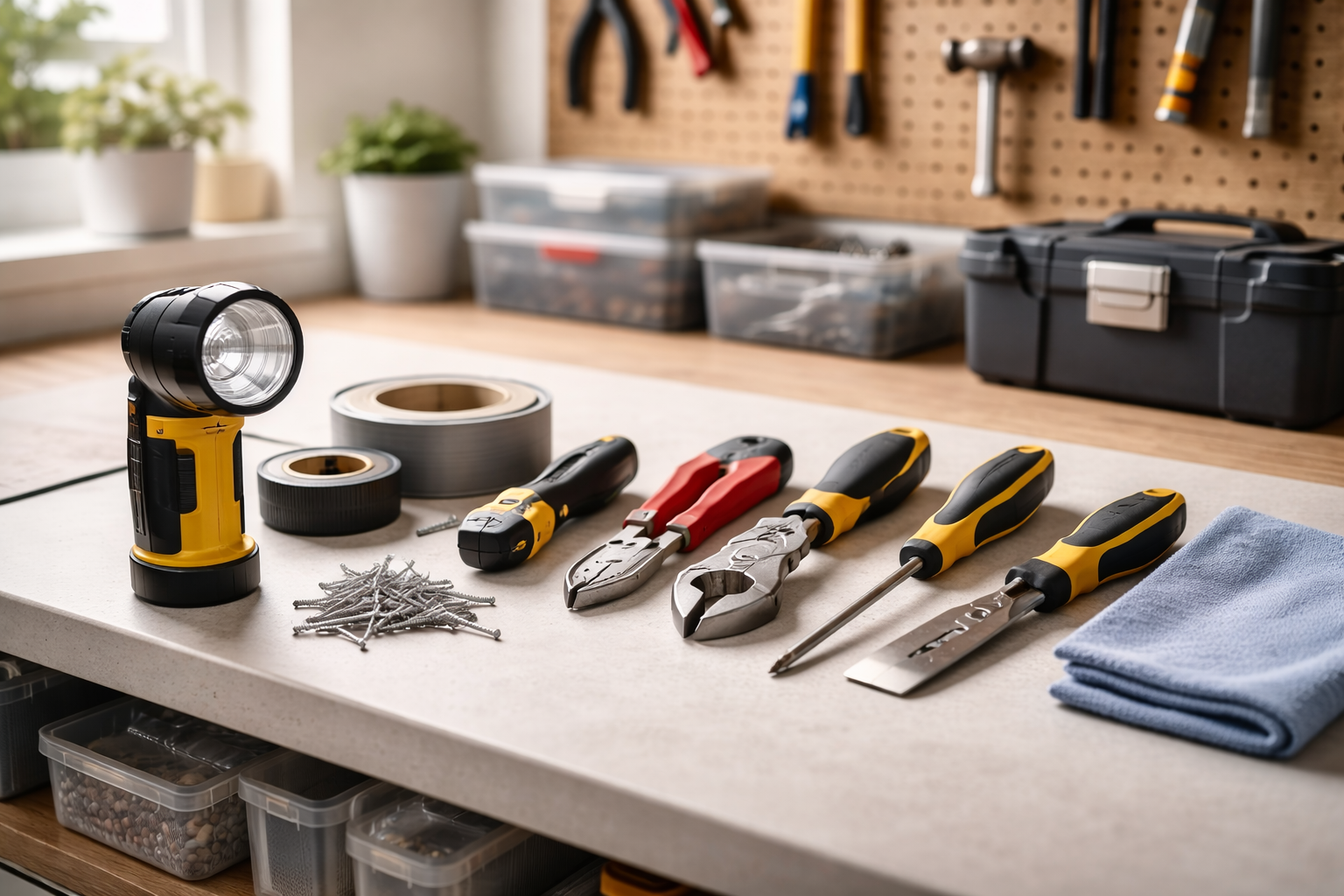
2️⃣ Basic Hand Tool Use
You don’t need many tools — just familiarity with a few basics.
Essential skills include:
- Using screwdrivers correctly
- Tightening and loosening bolts
- Measuring and marking accurately
- Safely cutting simple materials
These skills support small repairs, organization projects, and temporary fixes.
3️⃣ Temporary Repairs & Stabilization
DIY readiness focuses on temporary solutions, not permanent repairs.
Examples:
- Securing loose fixtures
- Stopping small leaks temporarily
- Reinforcing shelving or storage
- Stabilizing doors or windows
Temporary fixes buy time and reduce damage until full repairs are possible.
4️⃣ Basic Electrical Awareness (Non-Technical)
You don’t need to work on wiring to be prepared.
Useful skills include:
- Resetting breakers safely
- Identifying overloaded circuits
- Using extension cords properly
- Managing battery-powered lighting
Understanding limits prevents accidents and equipment damage.
5️⃣ Simple Plumbing Awareness
Plumbing issues are common during disruptions.
Helpful knowledge includes:
- Tightening loose fittings
- Using plumber’s tape
- Managing slow drips
- Knowing when to shut off water
These steps reduce damage and stress quickly.
6️⃣ Safe Use of Preparedness Equipment
Preparedness tools work best when used correctly.
Skills include:
- Safely operating backup lighting
- Using power stations correctly
- Managing cords and placement
- Avoiding indoor hazards
Proper use increases reliability and safety.
How DIY Skills Support Other Preparedness Areas
DIY readiness strengthens every other system:
- Food Independence — shelving, storage organization
- Water Security — container handling, minor plumbing awareness
- Home Energy & Power — safe device setup and lighting
- Medical Preparedness — home safety and organization
Skills amplify supplies.
Common DIY Readiness Mistakes
Most frustration comes from:
Trying to Learn Everything at Once
Focus on basics first.
Overbuying Tools
A small, well-used kit beats a large unused one.
Attempting Unsafe Repairs
Preparedness includes knowing limits.
Waiting Until Something Breaks
Learning skills in advance reduces stress.
👉 INSERT REUSABLE CTA BLOCK HERE
(Free Home Readiness Tools & Skills Checklist)
Building DIY Readiness Gradually
A calm approach works best:
- Learn shutoff locations
- Practice basic tool use
- Complete small projects
- Add skills only when useful
Consistency builds confidence.
Frequently Asked Questions
Do I need special training?
No. Most skills can be learned through basic guides and practice.
What if I rent?
Many DIY readiness skills apply to renters, including shutoff awareness, organization, and temporary fixes.
When should I call a professional?
Any time safety is uncertain. Preparedness supports professional care — it doesn’t replace it.
Final Thoughts
DIY readiness isn’t about doing more — it’s about being ready.
When households understand basic systems and skills:
- Stress decreases
- Problems feel manageable
- Disruptions are handled calmly
Small skills create long-term confidence.
👉 INSERT REUSABLE CTA BLOCK HERE
(Free 72-Hour Home Readiness Checklist)