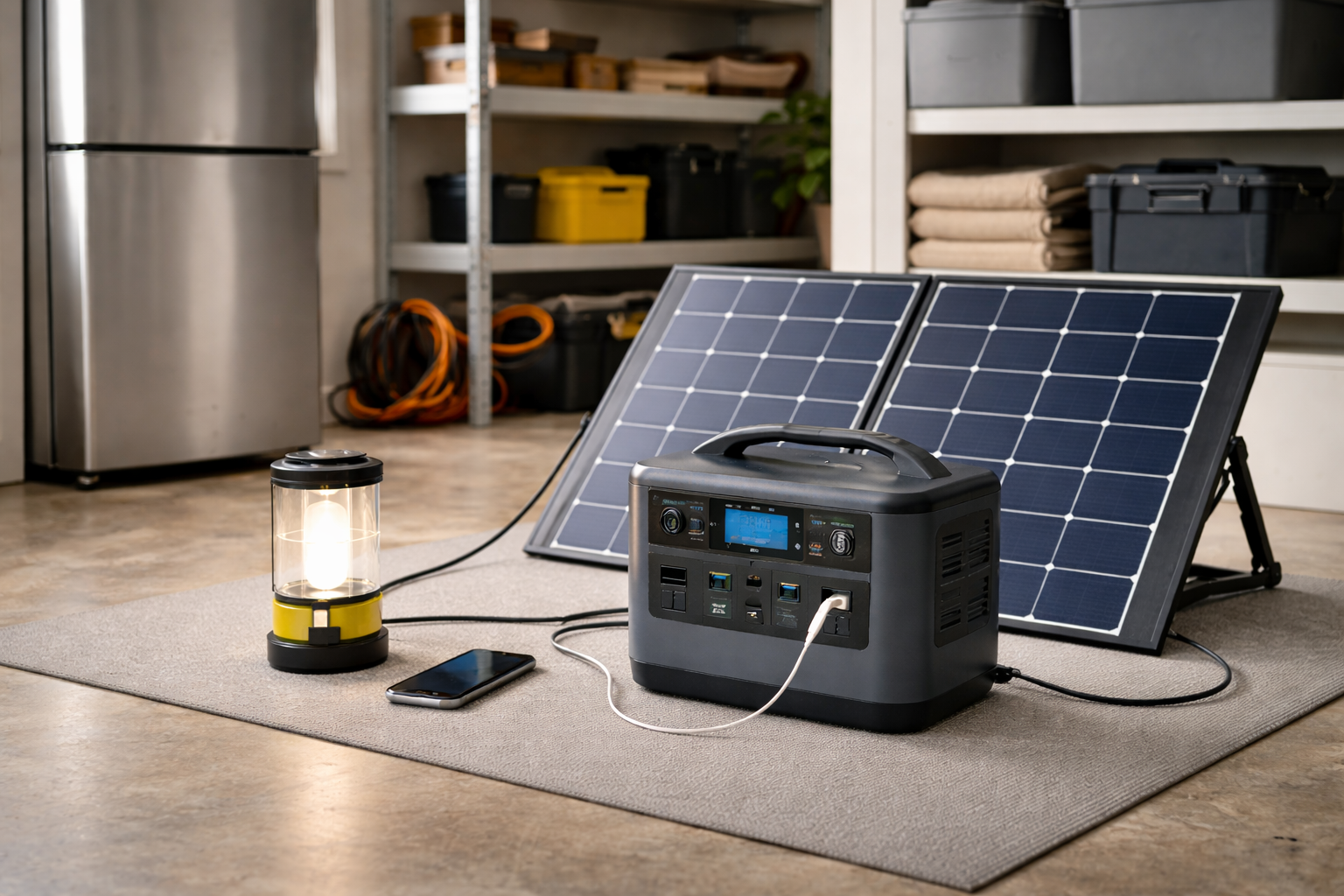
Quiet, reliable electricity for everyday homes
Power outages are one of the most common household disruptions — and one of the easiest to prepare for calmly.
For many households, traditional fuel generators are loud, require ongoing maintenance, and aren’t practical for indoor or apartment use. Solar generators (also called portable power stations) offer a quieter, safer alternative for keeping essential devices running during outages.
This guide explains what solar generators can realistically do, how to choose one for your home, and which features matter most — without hype or overbuying.
What a Solar Generator Actually Is
Despite the name, a solar generator doesn’t generate power on its own.
It is:
- A large rechargeable battery
- With multiple output ports
- Often paired with portable solar panels
You can recharge it using:
- A wall outlet
- A vehicle outlet
- Solar panels
Once charged, it provides clean, quiet electricity with no fuel or fumes.
What Solar Generators Are Best Used For
Solar generators work best for essential household needs, not whole-house power.
Common uses include:
- Charging phones and laptops
- Powering lights and lanterns
- Running Wi-Fi routers and modems
- Supporting small appliances
- Powering certain medical devices
They shine during short to medium outages where quiet, indoor-safe power matters.
What to Look for in a Home Backup Power Station
Not all solar generators are the same. Focus on capability, not marketing claims.
Battery Capacity
Measured in watt-hours (Wh).
- 300–500 Wh → phones, lights, small devices
- 500–1000 Wh → refrigerators (short duration), routers, laptops
- 1000+ Wh → longer runtimes, more flexibility
Choose capacity based on what you actually need to power.
Output Options
Look for:
- AC outlets
- USB ports
- DC ports
More output options = more flexibility during outages.
Ease of Use
Preparedness equipment should be:
- Simple to operate
- Easy to recharge
- Clearly labeled
Complex systems often go unused.
Noise & Safety
Solar generators:
- Operate silently
- Produce no fumes
- Are safe for indoor use
This makes them ideal for homes, apartments, and overnight use.
Solar Generators vs. Gas Generators
For many households, the choice is clear.
Solar Generators
✔ Quiet
✔ Indoor-safe
✔ Minimal maintenance
✔ Easy to use
Gas Generators
✘ Loud
✘ Require fuel storage
✘ Outdoor-only use
✘ Ongoing maintenance
Solar generators won’t replace whole-house systems, but they cover most everyday outage needs comfortably.
How to Use Backup Power Efficiently
Backup power lasts longer when used intentionally.
Best practices:
- Prioritize essential devices
- Avoid high-draw appliances unless necessary
- Recharge during daylight if using solar panels
- Track power usage visually if your unit allows
A little planning dramatically extends runtime.
Common Mistakes When Choosing Solar Generators
Most issues come from mismatched expectations.
Buying Too Small
Underpowered units can’t support key devices long enough.
Buying Too Large
Overspending on capacity you’ll never use adds complexity without benefit.
Ignoring Charging Options
Consider:
- How long it takes to recharge
- Whether solar panels are included or optional
- Available sunlight where you live
Balance matters.
(Free Home Power Planning Checklist)
Free 72-Hour Home Readiness Checklist
If basic services are interrupted, would your household be ready?
This simple checklist shows you:
- What to prepare first
- What most people overlook
- What you can safely ignore
Designed for calm, practical homes — not extreme scenarios.
👉 Get the free checklist and keep it for reference.
How Solar Power Fits Into Home Preparedness
Backup power supports:
- Food Independence (refrigeration, cooking)
- Water Security (filtration devices)
- Medical Preparedness (powered equipment)
Solar generators are most effective when part of a layered home readiness plan.
This guide is part of our broader Home Energy & Power resource, where we cover practical ways to keep essential systems running during outages.
Frequently Asked Questions
Will a solar generator power a refrigerator?
Many models can, but runtime depends on battery capacity and refrigerator efficiency. Planning matters more than raw power.
Can solar generators be used indoors?
Yes. They produce no fumes and are designed for indoor-safe use.
Do I need solar panels?
No. Panels are optional but helpful for longer outages or off-grid recharging.
Final Thoughts
Solar generators offer a calm, practical way to handle power disruptions.
They:
- Reduce stress during outages
- Improve household comfort
- Require minimal maintenance
- Fit naturally into normal homes
Choose based on your needs, not marketing promises.
👉 INSERT REUSABLE CTA BLOCK HERE
(Free 72-Hour Home Readiness Checklist)