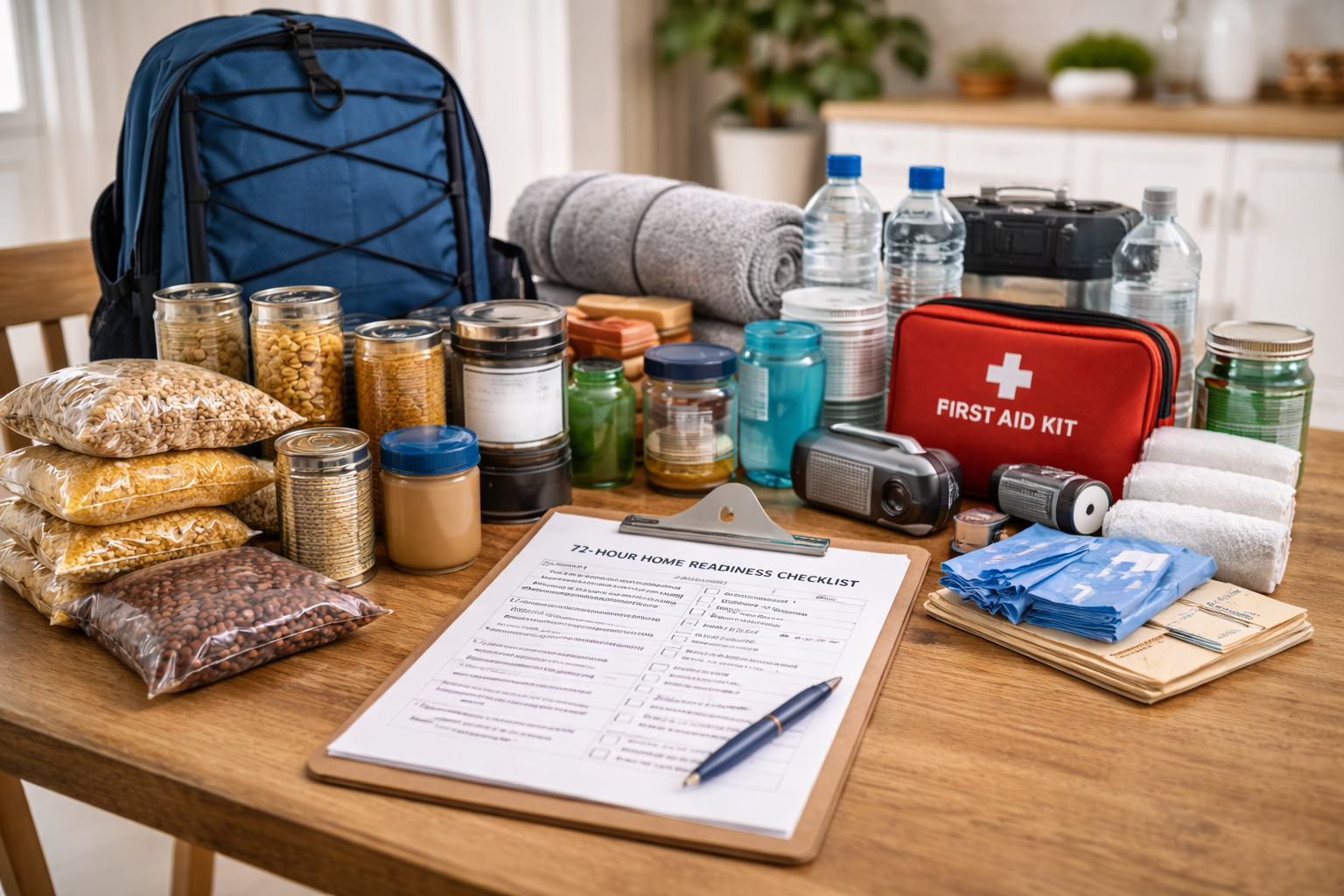
A calm, practical guide for everyday household readiness
Most preparedness planning doesn’t fail because people don’t care — it fails because the information feels overwhelming, extreme, or unclear.
A 72-hour home preparedness checklist provides a simple, realistic framework for staying safe and comfortable during common disruptions like short power outages, water advisories, supply delays, or temporary service interruptions.
This guide explains what household preparedness actually includes, what it does not include, and how to approach readiness calmly — without fear, panic, or overbuying.
✅ What Is a 72-Hour Home Preparedness Checklist?
A 72-hour home preparedness checklist outlines the basic supplies and systems a household needs to remain safe, comfortable, and functional for three days during common disruptions. It typically includes food, water, power, medical supplies, and basic home readiness — organized in a practical, manageable way.
(This definition is intentionally simple. Preparedness should be, too.)
✅ 72-Hour Home Preparedness Checklist (Quick Summary)
• Food – Familiar, shelf-stable meals and basic cooking needs
• Water – Drinking and hygiene water for all household members
• Power – Lighting, device charging, and limited backup electricity
• Medical – First aid supplies, medications, and hygiene items
• DIY & Home Readiness – Tools, shutoffs, and basic household skills
This checklist covers most short-term disruptions experienced by normal households.
Who This Checklist Is For
This checklist is designed for:
- Families and individuals
- Renters and homeowners
- Apartment dwellers
- Households seeking preparedness without extremes
It focuses on everyday disruptions, not rare or catastrophic scenarios.
❌ What This Checklist Does NOT Cover
This checklist does not include:
- Survival tactics
- Medical treatment or diagnosis
- Weapons or defensive gear
- Specialized training or extreme scenarios
Its purpose is organization and readiness, not replacing professionals or emergency services.
Food Independence
Food independence focuses on having enough familiar, shelf-stable food available to eat normally during short-term disruptions — without panic, waste, or unnecessary stockpiling.
A basic 72-hour food plan typically includes:
- Foods you already eat
- Shelf-stable meals and snacks
- Simple preparation options
👉 Related guide: Best Long-Term Food Storage for Home Use
For a broader look at building reliable household food systems, visit our Food Independence resource.
Water Security
Water security ensures households have safe water available for drinking, food preparation, and basic hygiene when service is interrupted or restricted.
A simple water plan usually covers:
- Drinking water per person
- Water for hygiene and cleaning
- Safe storage methods
👉 Related guide: How Much Water to Store Per Person
For a complete overview of household water planning, see our Water Security guide.
Home Energy & Power
Home energy preparedness focuses on maintaining basic function during power outages — not running an entire house indefinitely.
Key considerations include:
- Safe, reliable lighting
- Device and communication charging
- Limited backup electricity for essentials
👉 Related guide: Best Solar Generators for Home Backup Power
For a full breakdown of lighting, device charging, and backup electricity, explore our Home Energy & Power resource.
Medical & Health Preparedness
Medical preparedness supports calm response when care, supplies, or pharmacy access is delayed.
This typically includes:
- Basic first aid supplies
- Organized medications
- Hygiene and sanitation items
- Clear household health information
👉 Related guide: Home Emergency Medical Kit Checklist
For a broader overview of household health readiness, visit our Medical & Health Preparedness guide.
Practical DIY Readiness
DIY readiness focuses on basic skills and tools that help households manage small problems calmly until full repairs or services are available.
Helpful areas include:
- Knowing home shutoff locations
- Basic tool familiarity
- Temporary fixes and stabilization
👉 Related guide: Essential DIY Skills for Home Readiness
For simple skills and projects that increase everyday independence, see our Practical DIY Readiness resource.
How These Systems Work Together
Preparedness works best when systems support each other.
- Food planning relies on water and power
- Medical readiness depends on hygiene and lighting
- DIY skills support every other system
This checklist provides a balanced starting point, not a rigid rulebook.
Frequently Asked Questions
How long should a home be prepared for?
Most households plan for 72 hours as a practical minimum, then adjust over time based on comfort and needs.
Is a 72-hour kit enough?
A 72-hour plan covers most short-term disruptions. Preparedness improves when supplies are reviewed and expanded gradually.
Do I need special equipment?
No. Most household preparedness uses common items, organized intentionally.
Building Readiness Gradually
Preparedness doesn’t need to happen all at once.
A calm approach:
- Review what you already have
- Fill the most obvious gaps
- Organize supplies clearly
- Revisit occasionally
Small steps create meaningful confidence.
👉 Free 72-Hour Home Preparedness Checklist
Want a printable, step-by-step version of this guide?
Our free checklist helps you:
- Identify gaps quickly
- Avoid overbuying
- Build readiness calmly
[Get the Free Checklist]