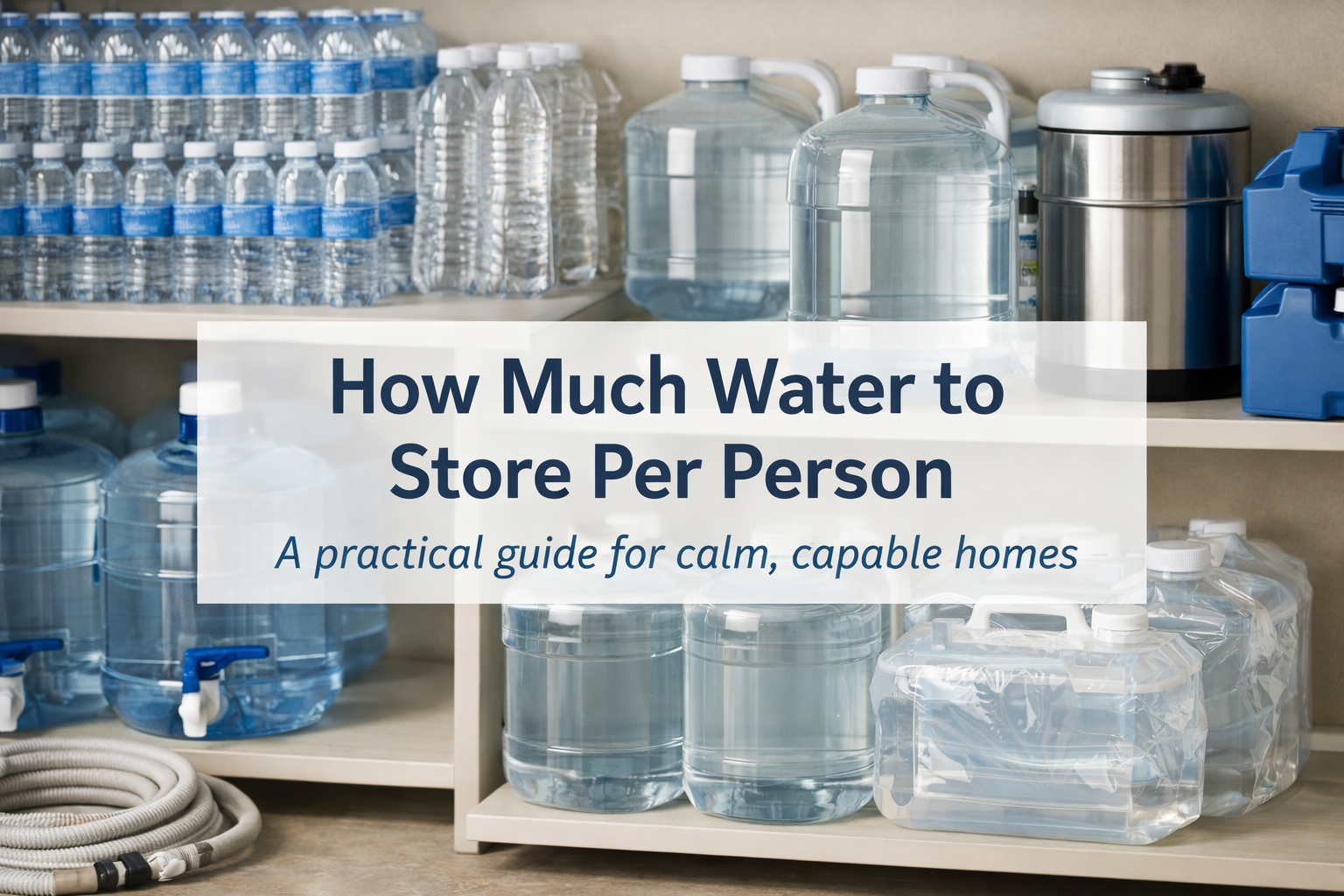
A practical guide for calm, capable homes
Water is one of the easiest preparedness gaps to fix — and one of the most common.
Most households don’t realize they’re short on water until it’s unavailable. Short outages, boil advisories, plumbing issues, or supply disruptions can turn into stress very quickly when there’s no backup.
The good news is that basic water planning is simple. You don’t need complex systems or excessive storage — just a clear understanding of how much water your household actually needs.
This guide explains how to calculate water needs per person and how to store water realistically for normal homes.
The Simple Water Storage Rule
A widely used and practical starting point is:
1 gallon of water per person per day
This covers:
- Drinking
- Basic food preparation
- Minimal hygiene
For most households, this rule provides a reliable baseline without overcomplicating planning.
How Long Should You Plan For?
The amount of water you store depends on how long you want to be prepared.
Common Planning Timeframes
- 72 hours (3 days)
A realistic minimum for short disruptions. - 5–7 days
A comfortable buffer for most common outages and advisories. - Longer-term planning
Often involves rotation systems, filtration, or alternative sources rather than storing all water at once.
Most households start with 3 days, then expand gradually.
Water Needs by Household Type
Different households have different water needs.
Adults
- Approximately 1 gallon per person per day
- More may be needed in hot climates or during physical activity
Children
- Often slightly less than adults
- Needs increase with age and activity
Seniors
- Similar daily needs as adults
- Medical and hygiene needs may increase usage
Pets
Don’t forget pets.
As a general guideline:
- Dogs: ½ to 1 gallon per day (size dependent)
- Cats: Smaller amounts, but still require planning
Drinking Water vs. Non-Drinking Water
Not all stored water needs to be drinking quality.
Drinking & Food Preparation
This water should be:
- Clean
- Stored in food-safe containers
- Protected from contamination
Hygiene & Cleaning
Water for:
- Hand washing
- Basic sanitation
- Cleaning
can often come from:
- Stored tap water
- Alternative sources
- Filtered water if needed
Separating these uses reduces pressure on limited drinking water.
Short-Term vs. Longer-Term Water Storage
Short-Term Storage Options
Best for 3–7 days:
- Bottled water
- Refillable containers
- Stackable water bricks
These are simple, accessible, and easy to rotate.
Longer-Term Planning
Instead of storing large volumes indefinitely, many households use:
- Larger refillable containers
- Basic filtration systems
- A rotation schedule
This approach balances preparedness with space and practicality.
Where to Store Water in a Normal Home
You don’t need special storage rooms.
Common locations include:
- Closets
- Utility rooms
- Under beds
- Garage (temperature permitting)
Avoid:
- Direct sunlight
- Extreme heat
- Areas prone to freezing
Consistent temperatures help water stay fresh longer.
Common Water Storage Mistakes
Most water issues come from simple oversights.
Storing Too Little
Many households underestimate how quickly water is used.
Even minimal hygiene adds up over a few days.
Storing Too Much Too Fast
Buying large volumes all at once can lead to:
- Storage problems
- Poor organization
- Forgotten supplies
Gradual planning works better.
Forgetting Rotation
Stored water should be:
- Checked periodically
- Replaced according to container guidance
- Used and refreshed when possible
Rotation keeps systems reliable.
Free 72-Hour Home Readiness Checklist
If basic services are interrupted, would your household be ready?
This simple checklist shows you:
- What to prepare first
- What most people overlook
- What you can safely ignore
Designed for calm, practical homes — not extreme scenarios.
👉 Get the free checklist and keep it for reference.
How Water Planning Fits Into Home Preparedness
Water planning works best when coordinated with:
- Food Independence (cooking and preparation)
- Home Energy & Power (refrigeration, filtration devices)
- Medical Preparedness (hygiene and health needs)
Water is a foundation system — when it’s covered, everything else becomes easier.
(Link here to /water-security/ silo page with descriptive anchor text.)
Frequently Asked Questions
How long does stored water last?
Properly stored water can last a long time, but it should be checked and rotated periodically based on container type and storage conditions.
Can I store tap water?
Yes. Clean tap water is generally safe to store when placed in appropriate containers and stored correctly.
Do I need special containers?
Containers designed for water storage are recommended, especially for longer-term use. They reduce contamination risk and make rotation easier.
Final Thoughts
Water preparedness doesn’t need to be complicated.
A simple plan:
- Reduces stress
- Improves household confidence
- Covers the most common disruptions
Start small, build gradually, and review occasionally. That’s enough for most homes.
Free 72-Hour Home Readiness Checklist
If basic services are interrupted, would your household be ready?
This simple checklist shows you:
- What to prepare first
- What most people overlook
- What you can safely ignore
Designed for calm, practical homes — not extreme scenarios.
👉 Get the free checklist and keep it for reference.