Simple skills and systems that increase everyday independence
Practical DIY readiness isn’t about becoming an expert or building complex systems.
It’s about having the skills and tools to handle small problems calmly when help, supplies, or services are delayed.
For most households, DIY readiness shows up as:
- Minor home repairs
- Simple maintenance tasks
- Temporary fixes during outages or delays
- The ability to adapt without stress
This section of Resilient Home Guide focuses on everyday skills and simple projects that make homes more capable — without extremes or specialized knowledge.
What DIY Readiness Really Means
DIY readiness does not mean doing everything yourself or avoiding professionals.
For everyday homes, it means:
- Understanding basic home systems
- Having common tools available
- Knowing simple fixes and workarounds
- Being able to maintain comfort and safety temporarily
DIY readiness is about confidence and flexibility, not perfection.
👉 Essential DIY Skills for Home Readiness
The Core Elements of Practical DIY Readiness
A practical approach usually includes a few key areas:
✔ Basic Tools & Supplies
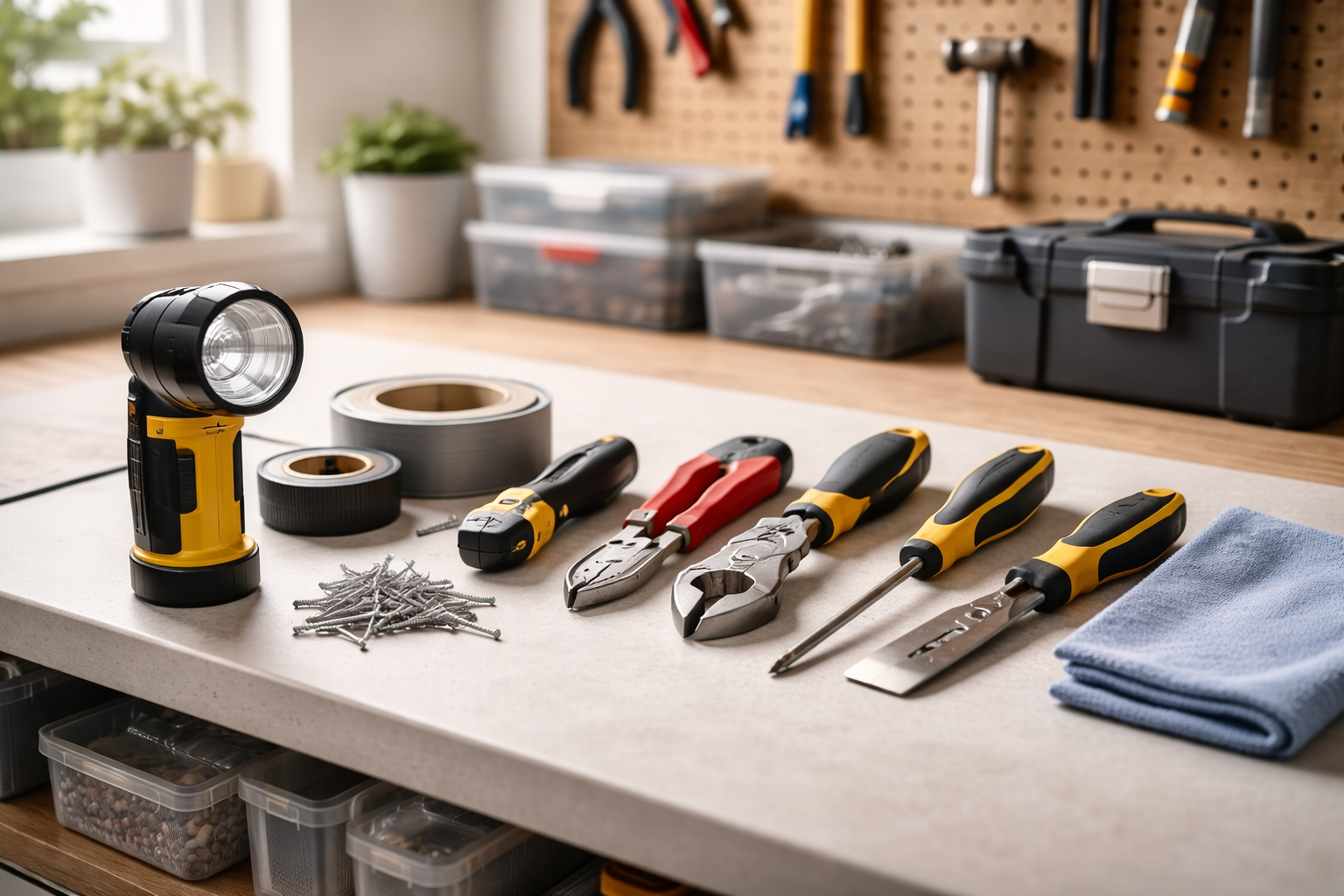
Most households benefit from a small set of reliable tools, such as:
- Screwdrivers and wrenches
- Pliers and a utility knife
- Flashlight or work light
- Tape, fasteners, and simple repair materials
These cover a surprising number of everyday issues.
✔ Simple Home Maintenance Skills
Knowing how to:
- Shut off water or power
- Fix minor leaks or loose fittings
- Replace batteries or filters
prevents small problems from becoming big ones.
✔ Temporary Solutions & Workarounds
Preparedness includes knowing how to:
- Secure items temporarily
- Create safe, short-term fixes
- Maintain function until full repairs are possible
These skills reduce stress during disruptions.
Start Here: Practical DIY Readiness Guides
If you’re building DIY confidence for the first time, start with these resources:
- Essential DIY Skills for Home Readiness (coming soon)
A beginner-friendly overview of the most useful household skills. - Basic Home Tool Kit for Preparedness (coming soon)
What tools actually matter — and which ones you can skip. - Simple DIY Projects That Improve Home Readiness (coming soon)
Small projects that increase comfort and capability without complexity.
As this section grows, we’ll add guides focused on apartments, renters, families, and low-cost DIY readiness.
Common DIY Readiness Mistakes
Most DIY frustration comes from:
- Buying too many tools too quickly
- Attempting complex projects unnecessarily
- Lacking basic knowledge of home systems
- Waiting until something breaks to learn
DIY readiness works best when it’s gradual, practical, and realistic.
How DIY Readiness Fits Into Home Preparedness
DIY skills support:
- Food Independence (storage, shelving, organization)
- Water Security (minor plumbing awareness)
- Home Energy & Power (safe device setup, lighting)
- Medical Preparedness (home safety and organization)
DIY readiness strengthens every other preparedness system.
To see how basic skills support all areas of preparedness, start with the 72-Hour Home Preparedness Checklist.
👉 Free Home Readiness Tools & Skills Checklist
Not sure which skills or tools actually matter?
Our checklist helps you:
- Identify practical DIY priorities
- Avoid unnecessary purchases
- Build confidence step by step
[Get the Free Checklist]
Building DIY Readiness Gradually
You don’t need to learn everything at once.
A calm approach:
- Learn where key shutoffs are
- Build a basic tool kit
- Practice small, simple tasks
- Add skills as needed
Small improvements create long-term confidence.
Explore More Preparedness Topics
Practical DIY readiness works best alongside:
- Food Independence
- Water Security
- Home Energy & Power
- Medical & Health Preparedness
Together, these systems help households adapt smoothly when plans change.